

Memory Work
Deepening Justice and Reconciliation
Sustained memory initiatives—oral histories, memorialisation, archival work, and cultural practices—are central to advancing transitional justice. They not only honour victims and acknowledge survivors but also counter erasure and denial.
In African contexts, memory work strengthens collective narratives, fosters social cohesion, and ensures that the past actively informs peacebuilding, reconciliation, and guarantees of non-recurrence.
Education
Building Informed and Resilient Societies
Transformative education in transitional justice goes beyond formal schooling and includes civic education, public dialogue and community-based learning. It equips citizens, especially young people, with the tools to understand past injustices, critically engage with history and take part in shaping accountable governance.
Education ensures that lessons from the past are not only remembered but actively shape future generations’ commitment to justice and non-recurrence.

Memory & Education Hubs
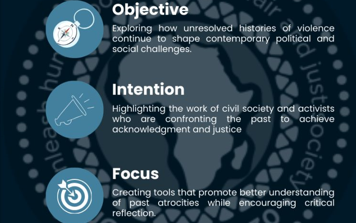
AUTJP Memory and Education Hub
Promoting memory and education about histories of violence and the strategic use of the African Union Transitional Justice Policy (AUTJP)