
Inaugural Nokuthula Simelane Memorial Lecture
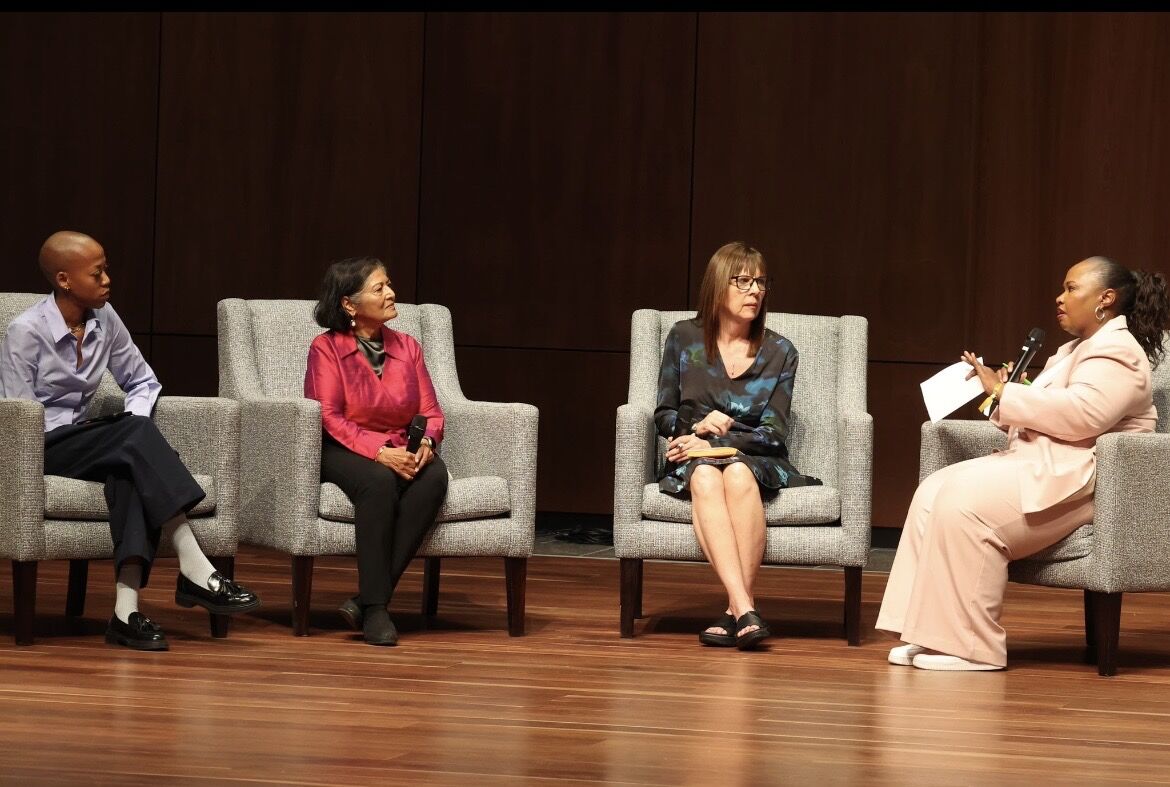
On 3 September 2026, Professor Helen Scanlon and Yasmin Sooka participated in the inaugural Nokuthula Simelane Memorial Lecture, hosted by the Nokuthula Simelane Foundation, alongside Amahle-Imvelo Jaxa.
The lecture honoured the life and enduring legacy of Nokuthula Simelane, a courageous anti-apartheid freedom fighter whose disappearance remains part of South Africa’s unfinished business of apartheid.
The discussion offered a powerful reminder that the pursuit of reconciliation cannot come at the expense of accountability.
Yasmin Sooka reflected on how the desire for reconciliation in South Africa obscured the need for accountability. Nokuthula’s story is not simply the story of a missing person. Her enforced disappearance represents the thousands of people who never came home, whose remains were never recovered, and whose families continue to live with unanswered questions and grief.
Further raising a difficult but necessary question: Why did the democratic state not pursue the prosecutions necessary to address these cases? Thirty years after the end of apartheid, South Africa continues to confront the consequences of prosecutions not pursued, reparations not adequately addressed and families left without justice.
The question of whether South Africa can truly “move on” without confronting these unresolved injustices remains central to the country’s transitional justice project.
Professor Helen Scanlon reflected on the work of TRC@30, which brings together experiences and reflections from truth commissions around the world three decades after South Africa’s Truth and Reconciliation Commission.
A key lesson emerging from these experiences is that South Africa is not unique in struggling to translate truth-telling into lasting accountability. Truth commissions may document violations and establish important historical records, but their recommendations can remain unrealised without sustained political and societal pressure. This is why the work of the Nokuthula Simelane Foundation, journalists and the next generation remains important.
For the ATJRC, these conversations reaffirm the importance of keeping questions of truth, accountability, reparations and memory at the centre of transitional justice debates across the continent.
The Nokuthula Simelane Memorial Lecture was more than an act of remembrance. It was a reminder that memory can be a form of accountability, and that remembering is not simply about looking backwards. It is about what we choose to do with the past in the present.
South Africa’s transitional justice project remains unfinished. The challenge before us is to ensure that the pursuit of justice does not become another unfinished chapter.
Share This Story, Choose Your Platform!
-
On 3 September 2026, Professor Helen Scanlon and Yasmin Sooka participated in the inaugural Nokuthula Simelane Memorial Lecture, hosted by the Nokuthula Simelane Foundation, alongside Amahle-Imvelo Jaxa.
![[Left to right, at the back]: Lee Sungju, Asemahle Tshoni, Anastasia Solomons, Sesetu Holomisa, A/Professor Helen Scanlon, Mirjam Ellemers, Stephanie Wild. [Left to right sitting]: Dr Gertrude Fester, Dr Saghar Shahidi-Birjandian, Professor Phil Clark](https://atjc.org.za/wp-content/uploads/2026/10/Launch-of-Dr-Saghar-Shahidi-Birjandian-PhD.-Shahidi-Birjandians-co-edited-volume-3.jpeg)
ATJRC’s Professor Helen Scanlon and the Department of Politics at the University of Cape Town hosted a seminar on 9 September 2026, marking the launch of Dr Saghar Shahidi-Birjandian, PhD. Shahidi-Birjandian’s co-edited volume, Intergenerational Survivors of Genocide and Mass Atrocities: Lived Experiences of Knowledge Providers.

In May 2025, the South African Department of Sports, Arts and Culture released the Draft National Policy Framework for Heritage Memorialisation for public comment. The Draft Policy Framework presents heritage as a tool of fostering nation-building, social cohesion and national development. It presents National Legacy Projects as an instrument for transforming South Africa's heritage landscape.
Publications & Archive
Gender Apartheid and the Crimes against Humanity Convention Negotiations: Solidarity, History and the Politics of Naming
Negotiations toward a new Crimes Against Humanity Convention have renewed debate about how international law should address systemic gender-based oppression.
Managing Memory or Confronting the Past? A Response to South Africa’s Draft National Policy Framework for Heritage Memorialisation
The South African government has released a Draft National Policy Framework for Heritage Memorialisation intended to guide how heritage and memory practices are governed nationally.
