
Report of the African Transitional Justice Research Coalition Meeting
Over two days, participants from across the continent and beyond considered how to sustain and/or re-strategise the pursuit of justice in an era of democratic backsliding, authoritarian consolidation, historical denialism, contested and shrinking civic space, and new forms of political violence.
A shared concern was the way transitional justice has remained tethered to the past, while political violence in Africa increasingly emerges and changes form in the present around elections, protests, and economic policies. In the words of a participant: “Injustice wears new clothes”. The meeting highlighted four major insights. First, transitional justice must evolve to address ongoing harms, not only historic ones. Second, memory work is never confined to the past, but is a dynamic force that shapes the present and future. The angered responses of youth movements to historical legacies of violence are thus a central tenet of memory-work. Third, civic space is under deliberate attack, as anti-rights actors capture institutions, laws, and digital platforms to control narratives and silence dissent. Finally, the AUTJP remains a powerful tool if civil society can mobilise its provisions to demand both accountability and economic justice.
Read the report
Share This Story, Choose Your Platform!
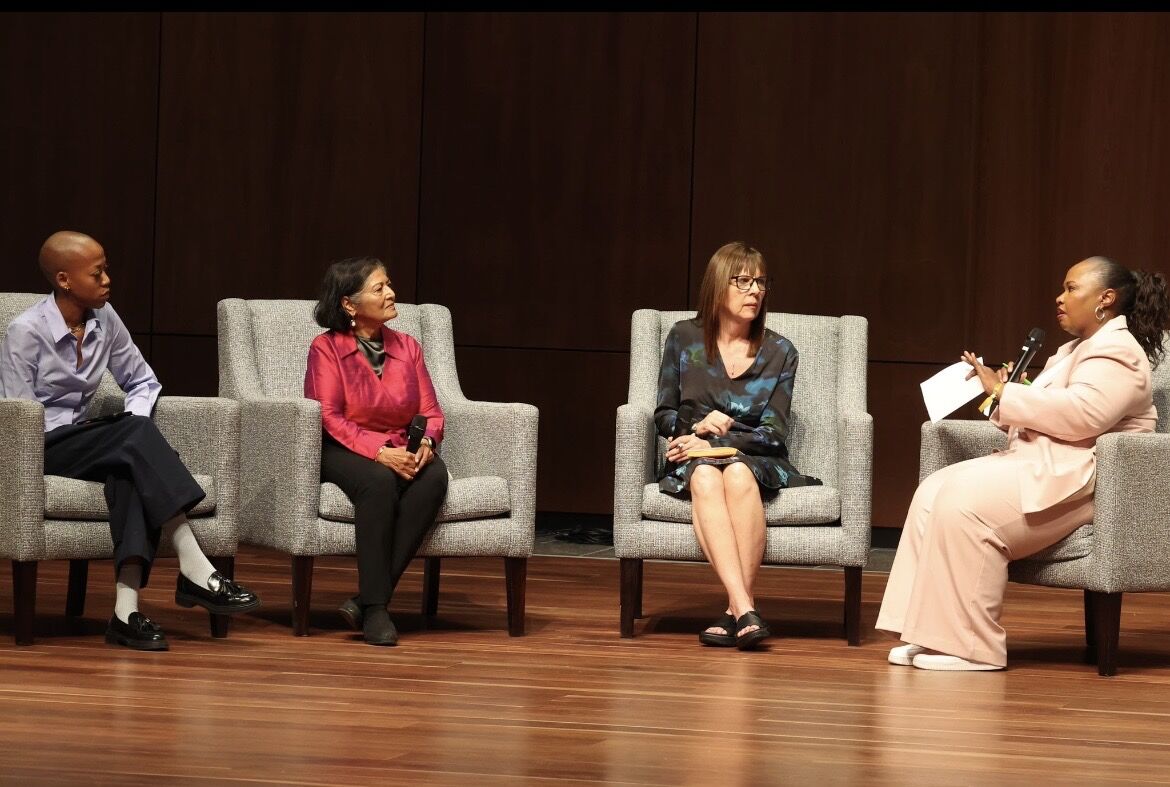
On 3 September 2026, Professor Helen Scanlon and Yasmin Sooka participated in the inaugural Nokuthula Simelane Memorial Lecture, hosted by the Nokuthula Simelane Foundation, alongside Amahle-Imvelo Jaxa.
![[Left to right, at the back]: Lee Sungju, Asemahle Tshoni, Anastasia Solomons, Sesetu Holomisa, A/Professor Helen Scanlon, Mirjam Ellemers, Stephanie Wild. [Left to right sitting]: Dr Gertrude Fester, Dr Saghar Shahidi-Birjandian, Professor Phil Clark](https://atjc.org.za/wp-content/uploads/2026/10/Launch-of-Dr-Saghar-Shahidi-Birjandian-PhD.-Shahidi-Birjandians-co-edited-volume-3.jpeg)
ATJRC’s Professor Helen Scanlon and the Department of Politics at the University of Cape Town hosted a seminar on 9 September 2026, marking the launch of Dr Saghar Shahidi-Birjandian, PhD. Shahidi-Birjandian’s co-edited volume, Intergenerational Survivors of Genocide and Mass Atrocities: Lived Experiences of Knowledge Providers.

In May 2025, the South African Department of Sports, Arts and Culture released the Draft National Policy Framework for Heritage Memorialisation for public comment. The Draft Policy Framework presents heritage as a tool of fostering nation-building, social cohesion and national development. It presents National Legacy Projects as an instrument for transforming South Africa's heritage landscape.
Publications & Archive
Gender Apartheid and the Crimes against Humanity Convention Negotiations: Solidarity, History and the Politics of Naming
Negotiations toward a new Crimes Against Humanity Convention have renewed debate about how international law should address systemic gender-based oppression.
Managing Memory or Confronting the Past? A Response to South Africa’s Draft National Policy Framework for Heritage Memorialisation
The South African government has released a Draft National Policy Framework for Heritage Memorialisation intended to guide how heritage and memory practices are governed nationally.
